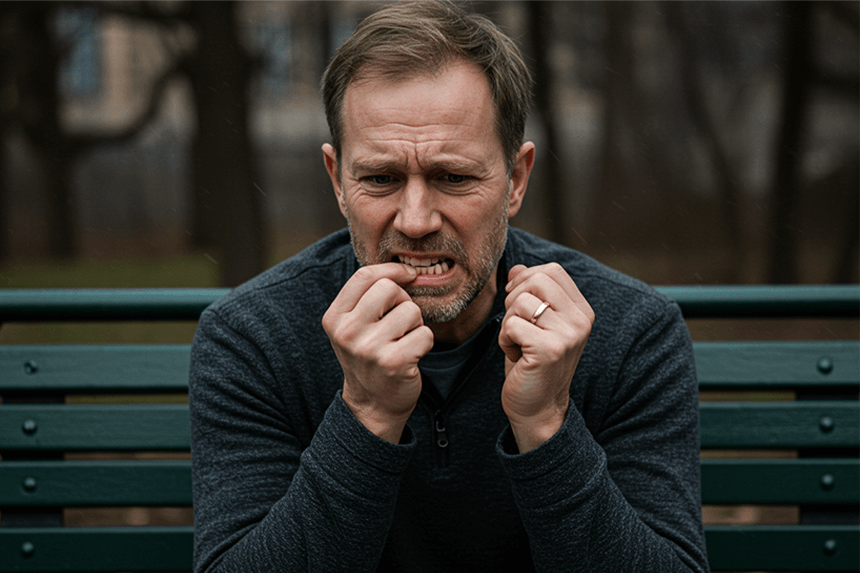
There’s a version of independence that looks like strength from the outside and feels like exhaustion from the inside. You handle everything yourself. You don’t ask for help, not because you don’t need it, but because asking feels like admitting something you’d rather not admit. You pride yourself on figuring things out alone, and when someone offers help, your first instinct is to decline before you’ve even considered whether you need it.
This isn’t strength. It’s a pattern. And like most patterns, it has a history.
Where Extreme Independence Comes From
Nobody decides to become someone who can’t accept help. It develops, usually through experiences that taught the lesson, however implicitly, that depending on others leads to disappointment.
Maybe help was offered and withdrawn. Maybe asking for something was met with criticism or dismissal. Maybe you grew up in an environment where self-sufficiency was the expectation and need was treated as weakness. Maybe you watched someone close to you be let down by dependence and quietly decided that would never be you.
The psychology of independence that becomes excessive is almost always a protection strategy. At some point, doing everything yourself was the safer option. The problem is that the protection outlives the circumstances that made it necessary, and what was once adaptive becomes limiting.
What It Actually Costs
Extreme independence has real costs that tend to be invisible until they accumulate into something that’s hard to ignore.
Relationships suffer
Genuine connection requires vulnerability, the willingness to need someone, to ask, to receive. When that’s consistently refused, relationships stay at a comfortable surface level that never quite becomes real closeness. People around you may sense the distance without being able to name it. You may sense it too.
Performance suffers
Collaboration, delegation, asking for expertise- these aren’t weaknesses. They’re how most meaningful work gets done. The person who insists on doing everything alone often works harder and achieves less than the person who knows when and how to bring others in.
Carrying everything yourself is heavy. Not in a dramatic way, just in the way that a backpack becomes noticeable after hours of wearing it, even if each individual item inside it is light.
The Difference Between Healthy Independence and Compulsive Self-Sufficiency
Healthy independence is a choice. You can do things yourself, and you can also choose to ask for help when it makes sense. The decision is flexible and responsive to the actual situation.
Compulsive self-sufficiency isn’t a choice in the same way. It’s a reflex. The idea of asking for help produces discomfort, something that feels like exposure, or weakness, or the risk of being let down, and that discomfort drives the behavior before there’s any conscious decision involved.
The psychology of independence at this level isn’t about capability. Most people with this pattern are genuinely capable. It’s about the emotional cost that dependence has come to represent, and the automatic avoidance of that cost regardless of whether the situation actually warrants it.
When Outside Support Changes the Equation
Some of this work is possible to do alone, which is, somewhat ironically, exactly what people with this pattern tend to try first. And to a point, reflection and self-awareness genuinely help.
But the pattern itself, the deep-seated difficulty with dependence and vulnerability, is often the kind of thing that responds better to support than to self-directed effort. Not because self-knowledge isn’t valuable, but because the thing being worked on is specifically the relationship to receiving help, and that relationship changes differently in the context of actually receiving it.
The psychology of independence that becomes a wall rather than a foundation is exactly what The Self Empowerment Center works with, not by dismantling your self-sufficiency, but by helping you access it as a genuine choice rather than a compulsion. There’s a meaningful difference between choosing to do something yourself and being unable to do anything else.
Conclusion
The most functional version of independence isn’t the refusal of all dependence. It’s the ability to move fluidly between self-reliance and collaboration, to do things yourself when that genuinely makes sense, and to ask for help when that makes sense too. If the second part of that equation has stopped feeling like a real option, that’s worth paying attention to.
The psychology of independence that closes off connection, collaboration, and support isn’t serving the goals it was built to protect. Understanding that, and doing something about it, is the kind of work that actually changes how daily life feels.
Visit The Self Empowerment Center if this resonates and you’re ready to explore it with support rather than alone.
FAQs
Is being highly independent always a psychological problem?
Not at all; independence is a genuine strength. The distinction is whether it’s a choice or a compulsion.
How do I know if my independence has become a problem?
A few honest questions help:
- Do I consistently decline help even when accepting it would clearly make things easier?
- Do I feel uncomfortable or exposed when someone offers to do something for me?
- Are my closest relationships missing a quality of depth or vulnerability I’d actually like?
- Does carrying everything alone leave me chronically depleted?